
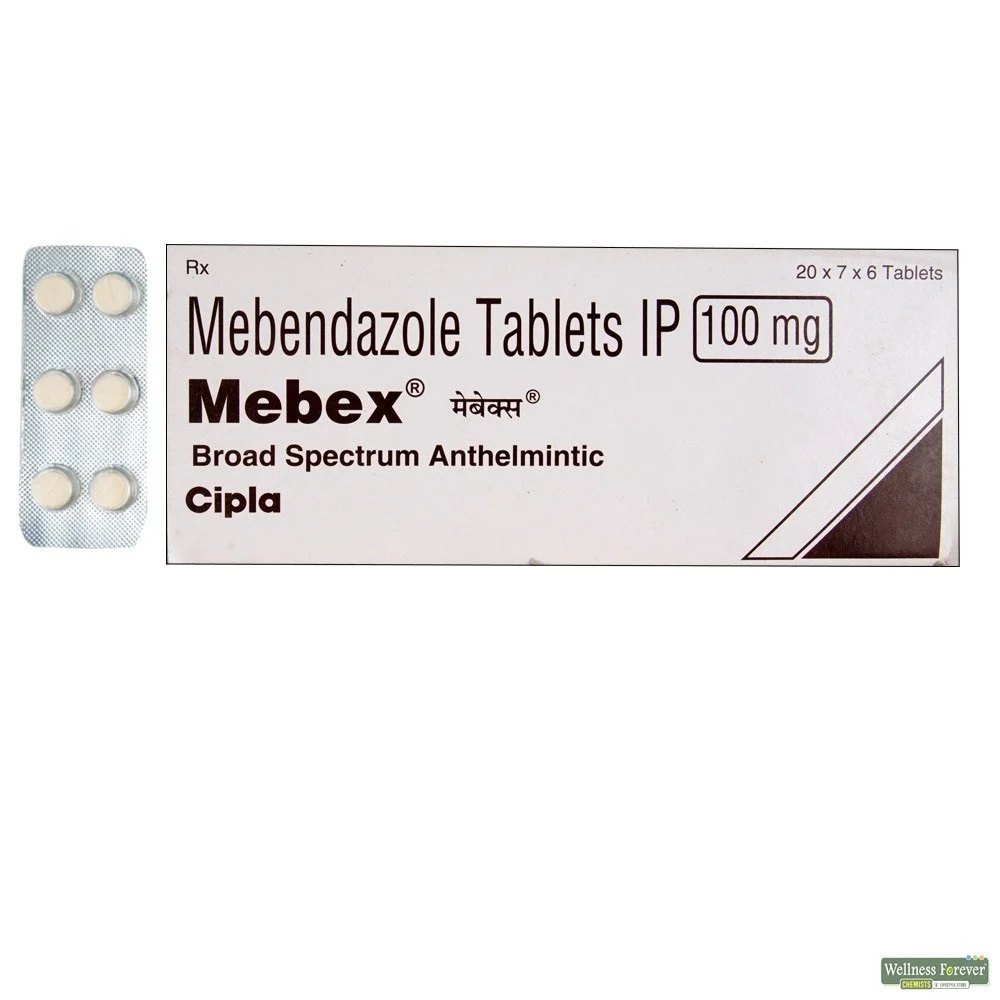
Mebendazole 100 mg
| Variation | Price | Quantity | Add To Cart |
|---|---|---|---|
| 180 pills | $550.00 |
|
Add to cart |
| 360 pills | $999.00 |
|
Add to cart |
| 90 pills | $370.00 |
|
Add to cart |
Mebendazole 100 mg is an oral anthelmintic medicine used to treat certain intestinal worm infections. It belongs to the benzimidazole class and is active against susceptible parasites that can infect the gastrointestinal tract. If you want to get rid of these problems, you can buy Mebendazole 100mg from Careskit.Com.
Mebendazole 100 mg is available as a chewable tablet in the U.S. Emverm formulation. The labeled indications include infections caused by pinworm, whipworm, roundworm, and hookworm in adults and children 2 years of age and older.
Mebendazole 100 mg Product Information
| Product Detail | Information |
| Active Ingredient | Mebendazole |
| Strength | 100 mg |
| Drug Class | Benzimidazole anthelmintic |
| Dosage Form | Chewable tablet |
| Route | Oral |
| Primary Use | Treatment of certain intestinal worm infections |
| Indicated Age | Adults and children 2 years and older under U.S. Emverm labeling |
| Common Parasites | Pinworm, whipworm, roundworm, hookworm |
| Brand Example | Emverm |
What Is Mebendazole 100 mg Used For?
Mebendazole 100 mg is used to treat susceptible gastrointestinal helminth infections. Under the U.S. Emverm labeling, it is indicated for infections caused by:
- Pinworm (Enterobius vermicularis)
- Whipworm (Trichuris trichiura)
- Roundworm (Ascaris lumbricoides)
- Hookworm, including Ancylostoma duodenale and Necator americanus
The labeled indication applies to adults and pediatric patients 2 years of age and older.
Mebendazole is specifically an antiparasitic medicine. It should not be used to treat bacterial or viral infections.
How Does Mebendazole Work?
Mebendazole is a benzimidazole anthelmintic. It interferes with parasite microtubule formation and disrupts important metabolic processes required for the worm’s survival.
After oral administration, most of the medicine remains in the gastrointestinal tract, where it produces much of its antiparasitic activity.
This local activity makes mebendazole particularly useful for susceptible intestinal worm infections.
Mebendazole 100 mg Dosage
The appropriate schedule depends on the type of worm infection.
According to the U.S. Emverm prescribing information, the recommended schedules are:
| Infection | Labeled Mebendazole 100 mg Schedule |
| Pinworm | 100 mg once |
| Whipworm | 100 mg morning and evening for 3 consecutive days |
| Roundworm | 100 mg morning and evening for 3 consecutive days |
| Hookworm | 100 mg morning and evening for 3 consecutive days |
The same labeled dosage schedule applies to adults and children aged 2 years and older.
If the patient is not cured three weeks after treatment, the U.S. labeling advises a second course of treatment. A healthcare professional should determine whether repeat treatment is appropriate.
How to Take Mebendazole 100 mg
Mebendazole 100 mg chewable tablets are taken orally.
The Emverm tablet may be:
- Chewed directly
- Swallowed
- Crushed and mixed with food
It can be taken with or without food, and no special fasting or purging procedure is required under the product labeling.
Follow the directions provided with your specific product and do not change the treatment schedule without professional advice.
Common Side Effects
Mebendazole is generally tolerated, but some patients may experience adverse effects.
Reported reactions include:
- Abdominal pain
- Diarrhea
- Nausea
- Vomiting
- Flatulence
- Loss of appetite
- Rash
These effects are listed in the product labeling for mebendazole.
Mild gastrointestinal symptoms may occur during treatment, but persistent or severe symptoms should be discussed with a healthcare professional.
Serious Side Effects and Warnings
Serious reactions are uncommon, but medical attention should be sought if symptoms suggest a severe allergic or other serious reaction.
Potential warning signs include:
- Difficulty breathing
- Swelling of the face, lips, tongue, or throat
- Severe or blistering skin rash
- Yellowing of the skin or eyes
- Unusual bruising or bleeding
- Severe weakness
- Persistent or worsening symptoms
Postmarketing reports involving mebendazole formulations and dosing schedules other than the U.S. Emverm 100 mg regimen have included serious reactions such as neutropenia, agranulocytosis, hepatitis, abnormal liver tests, glomerulonephritis, seizures, anaphylaxis, Stevens-Johnson syndrome, and toxic epidermal necrolysis.
Mebendazole 100 mg Precautions
Before taking mebendazole, tell your healthcare professional if you:
- Have previously had an allergic reaction to mebendazole.
- Have liver disease or abnormal liver tests.
- Are pregnant or planning to become pregnant.
- Are breastfeeding.
- Are taking prescription or nonprescription medicines.
- Are treating a child younger than the labeled age.
- Have previously experienced serious reactions to antiparasitic medicines.
Do not take more than recommended or extend treatment unnecessarily.
Mebendazole and Metronidazole Interaction
One particularly important interaction involves metronidazole.
The U.S. Emverm labeling warns that concomitant use of mebendazole and metronidazole should be avoided because serious skin reactions, including Stevens-Johnson syndrome and toxic epidermal necrolysis, have been reported.
Always provide your doctor or pharmacist with a complete list of medicines and supplements you use.
Mebendazole 100 mg During Pregnancy
If you are pregnant or planning pregnancy, consult a healthcare professional before using mebendazole.
The product labeling states that it is not known whether Emverm can harm an unborn baby. Treatment decisions should therefore consider the confirmed infection, the individual’s circumstances, and the potential benefits and risks.
Do not self-treat a suspected parasitic infection during pregnancy without appropriate medical guidance.
Mebendazole While Breastfeeding
Limited data indicate that a small amount of mebendazole can be present in human milk following oral administration.
There are no reported effects on breastfed infants in the limited available data, but the information is insufficient to establish risk with certainty. Breastfeeding patients should discuss treatment with a healthcare professional.
Mebendazole 100 mg for Children
The U.S. Emverm 100 mg chewable tablet is indicated for adults and children 2 years of age and older with the specified intestinal worm infections.
Safety and effectiveness have not been established in children younger than 2 years for this formulation. Convulsions have been reported with mebendazole use in children younger than 1 year.
Parents and caregivers should not give mebendazole to a young child without appropriate medical advice.
Mebendazole 100 mg and Reinfection
Some intestinal worm infections, particularly pinworm, can recur after treatment.
Reinfection can occur when parasite eggs remain on hands, clothing, bedding, household surfaces, or other contaminated materials. Good personal and household hygiene can help reduce the chance of reinfection.
If symptoms continue after treatment, a healthcare professional can determine whether another course of treatment or further evaluation is appropriate.
Missed Dose
The response to a missed dose depends on the prescribed regimen.
For a single-dose treatment, contact your healthcare professional or pharmacist if the scheduled dose was missed.
For a multi-day treatment schedule, take the missed dose when remembered unless it is nearly time for the next scheduled dose. Do not take extra medicine to compensate unless instructed by a healthcare professional.
Mebendazole 100 mg Overdose
Taking substantially more mebendazole than recommended or using it for prolonged periods can increase the risk of adverse effects.
Reported reactions associated with substantially higher doses or prolonged treatment include:
- Gastrointestinal symptoms
- Reversible liver-enzyme elevations
- Hepatitis
- Neutropenia
- Agranulocytosis
- Hair loss
- Glomerulonephritis
There is no specific antidote for mebendazole overdose. If an overdose is suspected, seek medical or poison-control advice promptly.
Storage
Store Mebendazole 100 mg according to the manufacturer’s instructions.
For the U.S. Emverm product:
- Store at 20°C to 25°C (68°F to 77°F).
- Keep the medicine in its original packaging.
- Keep it out of reach of children.
- Do not use the medicine after its expiration date.
Always follow the storage requirements printed on the specific product packaging.
Mebendazole 100 mg vs. Mebendazole 500 mg
Mebendazole is available in different strengths and formulations, and the treatment schedule is not determined simply by the tablet strength.
The U.S. Emverm product contains 100 mg per chewable tablet and uses different schedules depending on the parasite.
A 500 mg chewable mebendazole formulation, such as certain Vermox products, has different labeling and indications. Therefore, a 100 mg product should not automatically be replaced with a 500 mg product, or vice versa.
The correct strength and regimen depend on the exact formulation and diagnosed infection.
Mebendazole 100 mg for Pinworm
For pinworm infection, the U.S. Emverm labeling recommends one 100 mg tablet once for adults and children aged 2 years and older. If the infection is not cured three weeks after treatment, a second course may be advised.
Because pinworm spreads easily through contaminated hands and surfaces, hygiene measures are also important in reducing reinfection.
Mebendazole 100 mg for Roundworm, Whipworm and Hookworm
For whipworm, roundworm, and hookworm infections, the U.S. Emverm labeling recommends 100 mg twice daily for three consecutive days.
Treatment should be based on the diagnosed or suspected parasite and the applicable product instructions rather than using the same schedule for every worm infection.
Why Choose Careskit?
Careskit provides product-focused information designed to help readers understand medicines, their uses, precautions, and safe administration.
For Mebendazole 100 mg, the page highlights:
- Verified active ingredient and strength information
- Established antiparasitic uses
- Parasite-specific dosage information
- Important drug interactions
- Side effects and safety warnings
- Pregnancy and breastfeeding considerations
- Pediatric precautions
- Storage and administration guidance
Patients should use mebendazole according to the instructions for the exact product and the advice of a qualified healthcare professional.
Frequently Asked Questions
1. What is Mebendazole 100 mg used for?
Mebendazole 100 mg is used to treat certain intestinal worm infections, including pinworm, roundworm, whipworm, and hookworm under applicable product labeling.
2. How do you take Mebendazole 100 mg for pinworm?
The U.S. Emverm labeling recommends one 100 mg tablet once for pinworm infection in adults and children aged 2 years and older.
3. How long do you take Mebendazole 100 mg for roundworm?
For roundworm, the U.S. Emverm regimen is 100 mg in the morning and evening for three consecutive days.
4. Can Mebendazole 100 mg treat hookworm?
Yes. The U.S. Emverm label includes hookworm infections caused by Ancylostoma duodenale and Necator americanus, with 100 mg twice daily for three days.
5. Can children take Mebendazole 100 mg?
The U.S. Emverm 100 mg chewable tablet is indicated for adults and children aged 2 years and older. It is not established for children younger than 2.
6. Can Mebendazole 100 mg be taken with food?
Yes. Emverm can be taken with or without food. The tablet can also be chewed, swallowed, or crushed and mixed with food.
7. Can I take mebendazole with metronidazole?
The combination should be avoided unless specifically directed by a healthcare professional because serious skin reactions have been reported with concomitant use.
8. What are common Mebendazole 100 mg side effects?
Reported effects include abdominal pain, diarrhea, nausea, vomiting, flatulence, reduced appetite, and rash.
9. Can Mebendazole 100 mg be used during pregnancy?
Pregnant patients should consult a healthcare professional before treatment because the potential effects on an unborn baby are not fully established.
10. Can I take Mebendazole 100 mg while breastfeeding?
Small amounts can be present in human milk. Breastfeeding patients should discuss the benefits and potential risks of treatment with their healthcare professional.
11. What if the worm infection comes back after treatment?
Reinfection can occur, especially with pinworm. A healthcare professional can determine whether another course is appropriate and whether household hygiene or further evaluation is needed.
12. Does Mebendazole 100 mg treat viral infections?
No. Mebendazole is an antiparasitic medicine for susceptible worm infections and does not treat viral infections such as influenza or the common cold.
| Select Variation | 180 pills, 360 pills, 90 pills |
|---|
Only logged in customers who have purchased this product may leave a review.
Related products
-

Mebendazole 200 mg
Price range: $370.00 through $999.00Buy Now This product has multiple variants. The options may be chosen on the product page -
Mebendazole 500 mg
Price range: $400.00 through $1,040.00Buy Now This product has multiple variants. The options may be chosen on the product page



Reviews
There are no reviews yet.