
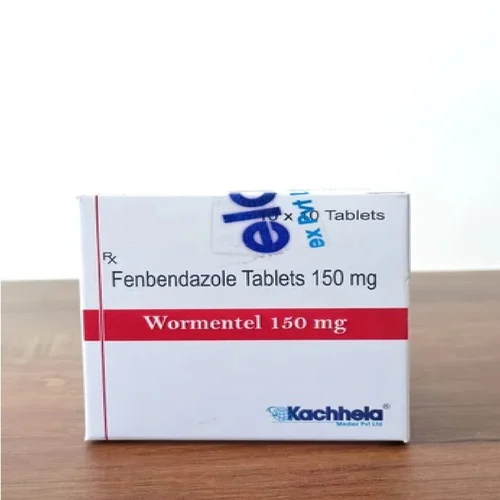
Fenbendazole 150 mg
| Variation | Price | Quantity | Add To Cart |
|---|---|---|---|
| 180 pills | $560.00 |
|
Add to cart |
| 360 pills | $989.00 |
|
Add to cart |
| 90 pills | $360.00 |
|
Add to cart |
Fenbendazole 150 mg is a benzimidazole-class antiparasitic used in veterinary medicine to treat and control certain intestinal and other susceptible parasitic worms in animals. It works by interfering with parasite cellular processes, helping eliminate susceptible parasites from the animal’s gastrointestinal tract. If you want to get rid of these problems, you can buy fenbendazole 150mg from Careskit.Com.
Important: Fenbendazole is a veterinary drug and should not be presented as a human medication. A 150 mg amount should not be treated as a universal veterinary dose because approved products come in different formulations and strengths, and the appropriate amount depends on the animal’s species, body weight, parasite, and product labeling. FDA information also indicates that different fenbendazole strengths or dosage forms may be used when specifically determined appropriate by a veterinarian.
Fenbendazole 150 mg Product Information
| Product Detail | Information |
| Active Ingredient | Fenbendazole |
| Strength | 150 mg |
| Drug Class | Benzimidazole anthelmintic |
| Category | Veterinary antiparasitic |
| Primary Purpose | Treatment and control of susceptible parasitic worms |
| Administration | Oral, depending on the veterinary formulation |
| Use | Animals only |
| Human Use | Not an FDA-approved human medicine |
What Is Fenbendazole 150 mg Used For?
Fenbendazole is used in veterinary medicine against certain susceptible gastrointestinal parasites. Depending on the approved product, species, and labeling, it may be used for parasites such as roundworms, hookworms, whipworms, and certain tapeworms.
For example, FDA-approved Panacur-C contains fenbendazole granules at 22.2% (222 mg/g) and is labeled for adult dogs and puppies six weeks of age or older for specified roundworms, hookworms, whipworms, and Taenia pisiformis tapeworms.
Other fenbendazole products have different species indications. For example, an FDA-approved fenbendazole oral suspension is labeled for certain lungworms, stomach worms, and intestinal worms in beef and dairy cattle and for specified stomach worms in goats.
Therefore, Fenbendazole 150 mg should not be assumed to treat every type of worm or every animal species.
How Does Fenbendazole Work?
Fenbendazole belongs to the benzimidazole family of anthelmintic medicines. It acts against susceptible parasites by disrupting cellular structures and processes needed for their survival.
The resulting antiparasitic activity helps reduce or eliminate susceptible worms when the medicine is administered according to the appropriate veterinary product instructions.
Fenbendazole 150 mg Dosage
There is no single standard 150 mg dose that applies to every animal.
Veterinary dosing should be determined using:
- Animal species
- Current body weight
- Parasite being treated
- Severity and type of infestation
- Specific fenbendazole formulation
- Approved product labeling
- Veterinarian instructions
For example, FDA labeling for Panacur-C in dogs recommends 50 mg/kg (22.7 mg/lb) once daily for three consecutive days for its labeled indications. This demonstrates why a fixed 150 mg amount cannot automatically be considered the correct dose for every dog or other animal.
For cattle and goats, an FDA-approved fenbendazole oral suspension uses a different labeled dose of 5 mg/kg (2.3 mg/lb) for its specified indications.
Do not calculate or administer a veterinary dose solely from the 150 mg strength without professional guidance.
How to Administer Fenbendazole
Administration depends on the particular veterinary product.
For an oral product, follow the package directions or veterinarian’s instructions carefully. Some formulations may be mixed with food, while other products have their own specific administration requirements.
For Panacur-C granules, FDA labeling instructs that the granules be mixed with a small amount of the animal’s usual food and that the animal consume the complete medicated portion.
Always use the correct formulation for the animal and parasite being treated.
Possible Side Effects
Fenbendazole is generally used according to veterinary labeling, but animals can still experience adverse effects.
Possible problems may include:
- Vomiting
- Diarrhea
- Reduced appetite
- Gastrointestinal upset
- Lethargy
- Other product- or species-specific reactions
A veterinarian should be contacted if an animal develops persistent vomiting, severe diarrhea, marked weakness, unusual bleeding, pale gums, or other concerning symptoms.
Important Prolonged-Use Warning
FDA has reported cases of bone marrow hypoplasia and pancytopenia in dogs receiving fenbendazole for longer than the labeled duration. As of October 20, 2023, FDA had received 12 such reports involving extra-label treatment lasting 5–14 days.
This is an important reason not to extend treatment or use alternative dosing schedules without veterinary supervision.
Important Precautions
Before using Fenbendazole 150 mg, consider the following:
- Confirm the animal’s species and current body weight.
- Identify the parasite when possible through veterinary examination or appropriate diagnostic testing.
- Use only a formulation appropriate for the animal.
- Follow the labeled treatment duration.
- Do not extend treatment without veterinary direction.
- Do not assume a human dose or human-use recommendation applies to animals.
- Monitor the animal for unexpected adverse reactions.
- Follow food-animal withdrawal requirements where applicable.
FDA notes that parasite resistance can develop with dewormers, making appropriate parasite diagnosis, dosing, and monitoring important.
Fenbendazole and Drug Interactions
The interaction profile can depend on the animal species, formulation, concurrent medicines, and underlying health conditions.
Tell the veterinarian about all medications, supplements, dewormers, and other veterinary products the animal is receiving before treatment.
Do not combine multiple antiparasitic products unless a veterinarian has determined that the combination is appropriate.
Pregnancy and Breeding Animals
Pregnancy considerations depend on the animal species and specific product.
Some FDA-approved fenbendazole products have labeled use in particular reproductive populations. For example, Panacur-C is labeled for adult dogs, including pregnant bitches, and puppies six weeks of age or older.
However, this does not mean every fenbendazole formulation is appropriate for every pregnant animal. Veterinary advice should be obtained before treatment during pregnancy, lactation, or breeding.
Fenbendazole 150 mg for Dogs
Fenbendazole is an established veterinary antiparasitic for dogs. FDA-approved canine products include Panacur-C, which is labeled for certain roundworms, hookworms, whipworms, and Taenia pisiformis tapeworms.
The FDA-labeled Panacur-C dose is 50 mg/kg once daily for three consecutive days. A 150 mg amount therefore should not automatically be described as a complete dose for a dog without considering its body weight and the specific product.
Fenbendazole 150 mg for Cats and Other Animals
Fenbendazole products are also used in veterinary medicine for other animal species under appropriate labeling or veterinary direction. However, indications, formulations, doses, and treatment durations can differ substantially.
FDA states that several approved fenbendazole products are available for dogs, cats, and horses, while other species and circumstances may require veterinarian-directed use.
Never transfer a dosing schedule from one species to another without professional veterinary guidance.
Is Fenbendazole 150 mg Approved for Humans?
No. Fenbendazole is not an FDA-approved human medicine.
Fenbendazole is recognized in FDA databases as a veterinary substance, and FDA-approved fenbendazole products are intended for animal use.
Claims that fenbendazole is an established human cancer treatment should not be presented as a medical fact. Human use should not be recommended based on veterinary products.
Storage
Store Fenbendazole products according to the specific manufacturer’s label.
General precautions include:
- Keep the product in its original container when possible.
- Follow the labeled storage temperature.
- Protect the product from inappropriate moisture or heat.
- Keep veterinary medicines away from children.
- Prevent unintended access by animals.
The manufacturer’s product label should take priority over generalized storage recommendations.
Overdose or Incorrect Administration
If an animal receives more fenbendazole than intended, contact a veterinarian for advice. Provide the veterinarian with:
- Product name
- Strength and formulation
- Approximate amount administered
- Animal species
- Current body weight
- Time of administration
- Any symptoms observed
Do not induce vomiting unless specifically instructed by a veterinarian or appropriate animal poison-control professional.
What Makes Fenbendazole 150 mg Different?
The key point with Fenbendazole 150 mg is that the number 150 mg describes the amount of active ingredient, not a universal treatment regimen.
Veterinary fenbendazole products are available in different concentrations and dosage forms. FDA records specifically identify products such as Panacur-C as 22.2% granules, equivalent to 222 mg/g, demonstrating that concentration and formulation matter when interpreting the labeled dose.
Why Choose Careskit?
Careskit provides product-focused information designed to help readers understand veterinary medicines before discussing treatment with a qualified professional.
For Fenbendazole 150 mg, the most important priorities are:
- Clear veterinary-use labeling
- Strength and formulation information
- Species-specific safety considerations
- Dose and administration guidance based on approved labeling
- Important prolonged-use warnings
- Practical precautions for animal owners
- Emphasis on responsible veterinary use
Always verify the product label and consult a veterinarian when the correct product, dose, or treatment duration is uncertain.
Frequently Asked Questions
1. What is Fenbendazole 150 mg used for?
Fenbendazole is a veterinary antiparasitic used against certain susceptible worms. Its approved indications depend on the animal species and specific product formulation.
2. Is Fenbendazole 150 mg a human medicine?
No. Fenbendazole is a veterinary drug and is not FDA-approved for human treatment. Veterinary formulations should not be promoted or substituted as human medicines.
3. Can I give Fenbendazole 150 mg to my dog?
Only if the product and dose are appropriate for the dog’s weight, parasite, and treatment plan. A veterinarian can determine whether fenbendazole is suitable.
4. Is 150 mg the standard dose for dogs?
No. Dog dosing is weight-based and product-specific. For example, FDA labeling for Panacur-C uses 50 mg/kg once daily for three days for specified parasites.
5. Can Fenbendazole treat all worms?
No. Its approved activity depends on the parasite and product. Different formulations have different labeled indications, so the specific parasite should be identified when possible.
6. Can Fenbendazole be used for cats?
Some fenbendazole products may be used in cats under veterinary direction, but product availability, formulation, indication, and dosing can differ from canine products.
7. Can Fenbendazole be used for pregnant animals?
Some products have approved uses in specific pregnant animals. For example, Panacur-C is labeled for pregnant bitches, but reproductive use should always follow the applicable product label or veterinarian’s instructions.
8. What happens if fenbendazole is used for too long?
Extended extra-label treatment can carry additional risks. FDA has reported bone marrow hypoplasia and pancytopenia in dogs treated longer than the labeled three-day duration.
9. Does Fenbendazole 150 mg require veterinary advice?
Veterinary guidance is recommended whenever the correct species, formulation, dose, parasite, or treatment duration is uncertain, particularly when using a nonstandard strength.
10. Is Fenbendazole 150 mg the same as 150 mg of every fenbendazole product?
The active ingredient amount may be equivalent, but formulations can differ in concentration, excipients, approved species, indications, and administration instructions. Always check the exact product label.
11. Can Fenbendazole be used for cancer in humans?
Fenbendazole should not be marketed as an established human cancer treatment. It is a veterinary antiparasitic and is not FDA-approved for treating cancer in people.
12. How should Fenbendazole 150 mg be stored?
Storage depends on the particular formulation. Follow the manufacturer’s label for temperature, moisture, container, and other storage requirements.
| Select Variation | 180 pills, 360 pills, 90 pills |
|---|
Only logged in customers who have purchased this product may leave a review.
Related products
-
Fenbendazole 222 mg
Price range: $360.00 through $989.00Buy Now This product has multiple variants. The options may be chosen on the product page -
Fenbendazole 500 mg
Price range: $399.00 through $1,049.00Buy Now This product has multiple variants. The options may be chosen on the product page -
Fenbendazole 444 mg
Price range: $399.00 through $1,049.00Buy Now This product has multiple variants. The options may be chosen on the product page



Reviews
There are no reviews yet.