
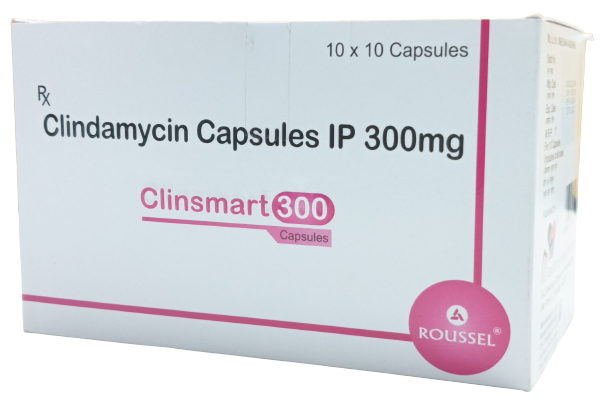
Clindamycin 300 mg
| Variation | Price | Quantity | Add To Cart |
|---|---|---|---|
| 180 pills | $590.00 |
|
Add to cart |
| 360 pills | $1,069.00 |
|
Add to cart |
| 90 pills | $380.00 |
|
Add to cart |
Clindamycin 300mg is an oral antibiotic used to treat certain serious bacterial infections caused by susceptible organisms. It belongs to the lincosamide antibiotic class and works by interfering with bacterial protein production, which limits bacterial growth. If you want to get rid of these problems, you can buy Clindamycin 300mg from Careskit.Com.
Because clindamycin can cause serious antibiotic-associated diarrhea and colitis, it should be used only when a bacterial infection is proven or strongly suspected and when it is an appropriate treatment option.
Clindamycin 300mg Product Information
| Product | Clindamycin 300mg |
| Active Ingredient | Clindamycin hydrochloride |
| Strength | 300mg |
| Drug Class | Lincosamide antibiotic |
| Dosage Form | Oral capsule |
| Main Use | Treatment of susceptible bacterial infections |
| Administration | Oral |
| Typical Adult Dosing Range | 150–450mg every 6 hours, depending on infection severity |
| Prescription Status | Prescription medicine |
What Is Clindamycin 300mg Used For?
Clindamycin is prescribed for certain serious bacterial infections involving susceptible organisms.
Current prescribing information includes infections such as:
- Serious skin and soft-tissue infections
- Serious respiratory tract infections
- Anaerobic lung infections, including lung abscess and anaerobic pneumonitis
- Certain intra-abdominal infections
- Peritonitis and intra-abdominal abscesses
- Certain infections affecting the female pelvis and genital tract
- Septicemia caused by susceptible bacteria
- Serious infections caused by susceptible streptococci, staphylococci, or pneumococci
For some susceptible infections, particularly when penicillin cannot be used or is considered inappropriate, clindamycin may be selected by a healthcare professional.
Clindamycin is not effective against viral infections such as the common cold or influenza.
How Does Clindamycin 300mg Work?
Clindamycin inhibits bacterial protein synthesis. It binds to the bacterial ribosome and interferes with the production of proteins that bacteria need for growth and survival.
By disrupting this process, clindamycin can suppress susceptible bacteria and help the body’s immune system eliminate the infection.
Its antibacterial activity depends on the susceptibility of the organism responsible for the infection, which is why bacterial culture and susceptibility testing may be useful when clinically appropriate.
Clindamycin 300mg Dosage
The appropriate dose depends on the type and severity of the infection, the bacteria involved, the patient’s age and overall health, and the prescriber’s treatment plan.
For adults, current labeling gives the following general oral dosing ranges:
- Serious infections: 150mg to 300mg every 6 hours
- More severe infections: 300mg to 450mg every 6 hours
Therefore, a 300mg capsule may be prescribed at different frequencies depending on the infection. It should not automatically be taken every 6 hours unless that schedule has been prescribed.
For children who can safely swallow capsules, dosing is weight-based rather than simply using the adult 300mg dose. Children who cannot swallow capsules may require a different formulation.
How to Take Clindamycin 300mg
Take clindamycin exactly as directed by your healthcare professional.
- Swallow the capsule whole.
- Take it with a full glass of water.
- Do not lie down for at least 30 minutes after taking the capsule to reduce the risk of esophageal irritation.
- Take doses at evenly spaced times when possible.
- Do not take extra capsules to compensate for a missed dose.
- Complete the prescribed course unless your healthcare professional instructs you to stop.
Current labeling specifically recommends a full glass of water and remaining upright for at least 30 minutes after taking oral clindamycin.
Common Side Effects of Clindamycin 300mg
Some people may experience side effects while taking clindamycin.
Possible effects include:
- Nausea
- Vomiting
- Abdominal discomfort
- Diarrhea
- Abdominal pain
- Skin rash
- Changes in bowel habits
Mild gastrointestinal symptoms can occur with antibiotics, but significant or persistent diarrhea should not be ignored because clindamycin has a particularly important association with antibiotic-associated colitis.
Serious Side Effects and Important Warnings
Clostridioides difficile-Associated Diarrhea
One of the most important safety concerns with clindamycin is Clostridioides difficile-associated diarrhea (CDAD).
It can range from mild diarrhea to severe, potentially life-threatening inflammation of the colon. It may occur during treatment or even after the antibiotic has been completed. Current labeling notes that CDAD has been reported for up to two months after antibacterial treatment.
Contact a healthcare professional promptly if you develop:
- Severe or persistent diarrhea
- Watery or frequent stools
- Abdominal cramping
- Fever
- Blood or mucus in the stool
Do not automatically treat significant antibiotic-associated diarrhea with an over-the-counter anti-diarrheal medicine without medical advice.
Allergic Reactions
Clindamycin can cause hypersensitivity reactions. Seek urgent medical attention for:
- Facial, lip, tongue, or throat swelling
- Difficulty breathing
- Severe widespread rash
- Fainting or severe dizziness
Clindamycin is contraindicated in people with a known hypersensitivity to clindamycin or lincomycin.
Severe Skin Reactions
Rare but serious skin reactions can occur with antibiotics. A rapidly spreading rash, blistering, peeling skin, mouth sores, or other severe skin symptoms require immediate medical evaluation.
Clindamycin 300mg and Antibiotic Resistance
Clindamycin should not be used for infections that are viral or for bacterial infections where it is not an appropriate treatment.
Unnecessary antibiotic exposure contributes to antimicrobial resistance. Current labeling recommends using clindamycin only for infections that are proven or strongly suspected to be caused by susceptible bacteria.
Using the correct antibiotic, dose, and treatment duration helps reduce unnecessary antibiotic exposure.
Clindamycin 300mg Precautions
Tell your healthcare professional if you have:
- A previous history of antibiotic-associated colitis
- Chronic digestive or intestinal disease
- A history of severe allergic reactions to antibiotics
- Liver problems
- Other significant medical conditions
- Previous reactions to clindamycin or lincomycin
Your medical history can influence whether clindamycin is an appropriate antibiotic choice.
Clindamycin 300mg Drug Interactions
Before starting clindamycin, provide your healthcare professional with a complete list of medicines, supplements, and other products you use.
Clindamycin may interact with medicines or substances that affect neuromuscular transmission, and caution may be needed when it is used with certain neuromuscular blocking agents.
Your prescriber or pharmacist should review your medication list before treatment, particularly if you take multiple prescription medicines.
Clindamycin 300mg During Pregnancy and Breastfeeding
Tell your healthcare professional if you are pregnant, planning pregnancy, or breastfeeding.
Whether clindamycin is appropriate depends on the infection, treatment alternatives, and individual circumstances. Your healthcare professional can assess the potential benefits and risks before recommending treatment.
Do not start or discontinue an antibiotic during pregnancy without professional guidance.
What If You Miss a Dose?
If you forget to take a scheduled dose, take it when you remember unless it is nearly time for your next dose.
If the next dose is close, skip the missed dose and continue with the regular schedule.
Do not take two doses together unless specifically instructed by your healthcare professional.
If you repeatedly miss doses, contact your pharmacist or prescriber for advice.
What Happens If You Take Too Much Clindamycin?
Do not take more clindamycin than prescribed.
If you accidentally take substantially more than your prescribed dose, contact a healthcare professional or poison-control service for guidance. Hemodialysis and peritoneal dialysis are not effective methods for removing clindamycin from the bloodstream.
Clindamycin 300mg Storage
Store clindamycin according to the product label.
For commonly labeled clindamycin hydrochloride capsules:
- Store at controlled room temperature.
- Keep the capsules in their original container.
- Protect the medicine from excessive heat and moisture.
- Keep it away from children and pets.
- Do not use capsules that are damaged or appear abnormal.
Some current product labels specify storage at 20°C to 25°C (68°F to 77°F). Always follow the storage instructions on your specific product.
Clindamycin 300mg Safety Tips
For safer antibiotic treatment:
- Use clindamycin only when prescribed for an appropriate bacterial infection.
- Take each dose exactly as directed.
- Swallow capsules with a full glass of water.
- Remain upright for at least 30 minutes after taking a capsule.
- Never share antibiotics with another person.
- Do not save leftover capsules for a future illness.
- Contact a healthcare professional if significant diarrhea develops.
- Complete the prescribed treatment unless your prescriber tells you otherwise.
- Tell your healthcare professional about previous antibiotic reactions.
- Seek urgent help for severe allergic or skin reactions.
Why Choose Careskit?
Careskit provides accessible information about prescription medicines to help patients better understand their treatments, including active ingredients, strengths, administration, precautions, and potential adverse effects.
For Clindamycin 300mg, understanding the infection being treated and following the prescribed schedule are especially important because clindamycin carries a significant risk of antibiotic-associated colitis.
Always use clindamycin according to professional medical advice and the product information supplied with your medicine.
Frequently Asked Questions About Clindamycin 300mg
1. What is Clindamycin 300mg?
Clindamycin 300mg is an oral antibiotic capsule containing clindamycin hydrochloride. It is used for certain serious bacterial infections caused by susceptible organisms.
2. What infections does Clindamycin 300mg treat?
It may be used for certain serious respiratory, skin and soft-tissue, intra-abdominal, pelvic, and bloodstream infections caused by susceptible bacteria.
3. Is Clindamycin 300mg a strong antibiotic?
Clindamycin is an effective antibiotic against susceptible bacteria, but describing antibiotics as simply “strong” can be misleading. The appropriate antibiotic depends on the organism, infection site, resistance pattern, and patient factors.
4. How often is Clindamycin 300mg taken?
Adult oral dosing may range from 150mg to 300mg every 6 hours for serious infections and 300mg to 450mg every 6 hours for more severe infections. Your prescription determines the correct schedule.
5. Should I take Clindamycin 300mg with food?
Clindamycin capsules can generally be taken with or without food. More importantly, swallow the capsule with a full glass of water and remain upright for at least 30 minutes afterward.
6. Why must I drink plenty of water with clindamycin?
A full glass of water helps the capsule pass into the stomach and reduces the potential for irritation of the esophagus. Remaining upright for at least 30 minutes provides additional protection.
7. Can Clindamycin 300mg cause diarrhea?
Yes. Diarrhea can occur, but severe or persistent diarrhea is particularly important with clindamycin because it may indicate C. difficile-associated diarrhea or colitis.
8. Can Clindamycin treat a cold or flu?
No. Colds and influenza are viral infections, while clindamycin is an antibacterial medicine. It should not be used for viral illnesses.
9. Can I stop Clindamycin 300mg when I feel better?
Do not change or stop your prescribed antibiotic course without speaking with your healthcare professional. If significant diarrhea or another serious reaction develops, contact your prescriber promptly for instructions.
10. Can children take Clindamycin 300mg?
Children may receive clindamycin when appropriate, but dosing is generally based on body weight and infection severity. A 300mg capsule may not be suitable for a child who cannot swallow capsules.
11. Is Clindamycin 300mg safe during pregnancy?
Whether clindamycin is appropriate during pregnancy depends on the infection and individual circumstances. A healthcare professional should determine whether its potential benefits outweigh the risks.
12. What should I do if I develop severe diarrhea after clindamycin?
Contact a healthcare professional promptly. Severe antibiotic-associated diarrhea can be caused by C. difficile and can sometimes occur after the antibiotic has been discontinued.
| Select Variation | 180 pills, 360 pills, 90 pills |
|---|
Only logged in customers who have purchased this product may leave a review.
Related products
-
Clindamycin 150 mg
Price range: $370.00 through $999.00Buy Now This product has multiple variants. The options may be chosen on the product page



Reviews
There are no reviews yet.